Reads

Wood, Innovation, and Public Management: CND Presented a Milestone in Sustainable Architecture

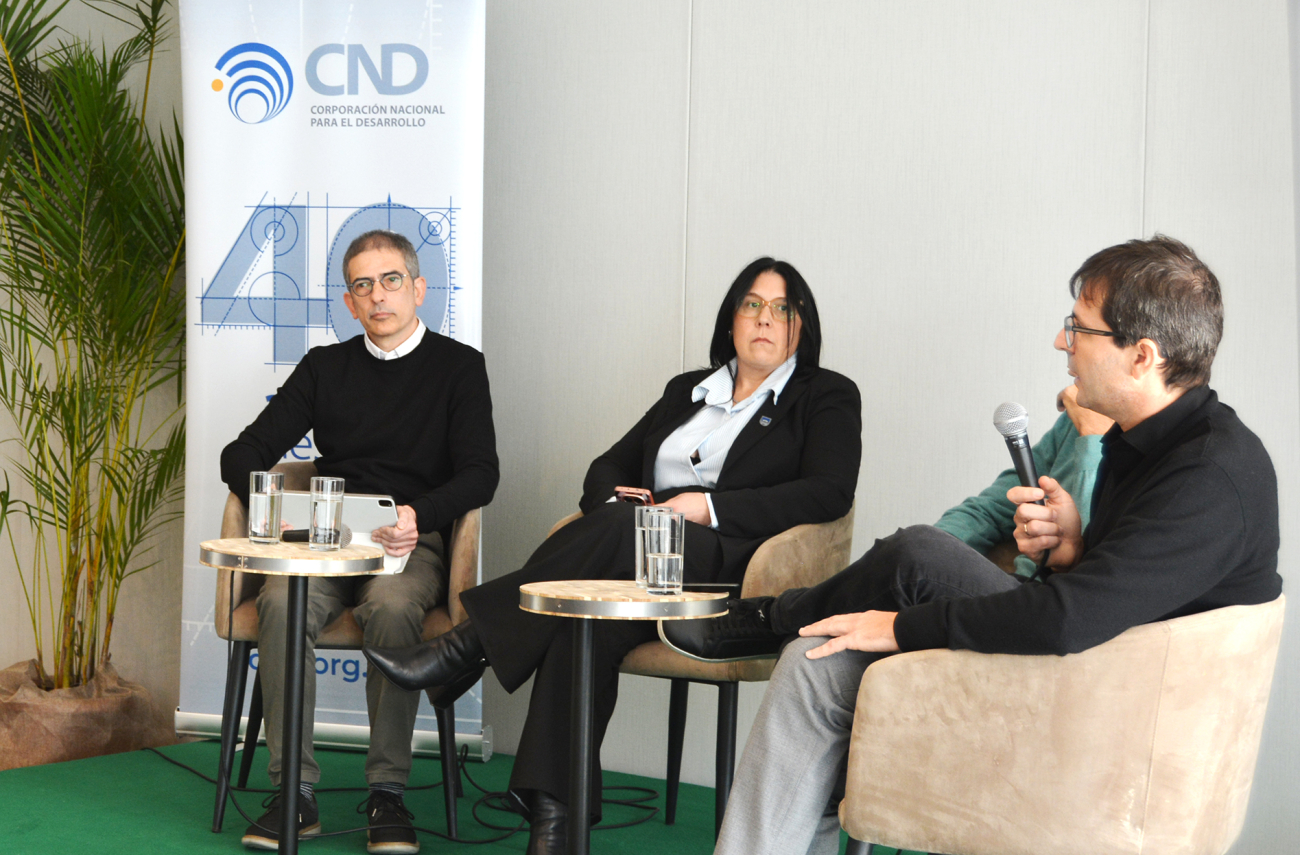
CND participated in the Uruguay Sustainable Expo 2026 with a panel discussion focused on wood construction, based on a specific case study: the new annex of UTEC’s Northern Regional Technological Institute in Rivera, the first public educational building in Uruguay constructed with a mass timber structure.

The event, organized by CND, brought together representatives from public administration, academia, and industry to discuss how public infrastructure can become a space for innovation, sustainability, and national productive development. The panel featured presentations by Architect Maurizio Rodríguez Torriano, CND’s Manager of Technical Architectural Oversight; Technician Cyntia Da Silva, coordinator of the Wood Technology program at Udelar’s Rivera campus; and Economist Sebastián Bianchi, technical advisor in the Industrial Policy division of the National Directorate of Industries at the Ministry of Industry, Energy, and Mining (MIEM).

During the event, CND presented the UTEC Rivera expansion project as an example of sustainable public architecture and highlighted its role as trustee of the UTEC Trust, through which it is responsible for contracting, managing, and providing technical and financial oversight of the projects. In this case, UTEC acts as the settlor and CND as the trustee, coordinating the execution of a project that incorporates new wood construction technologies.

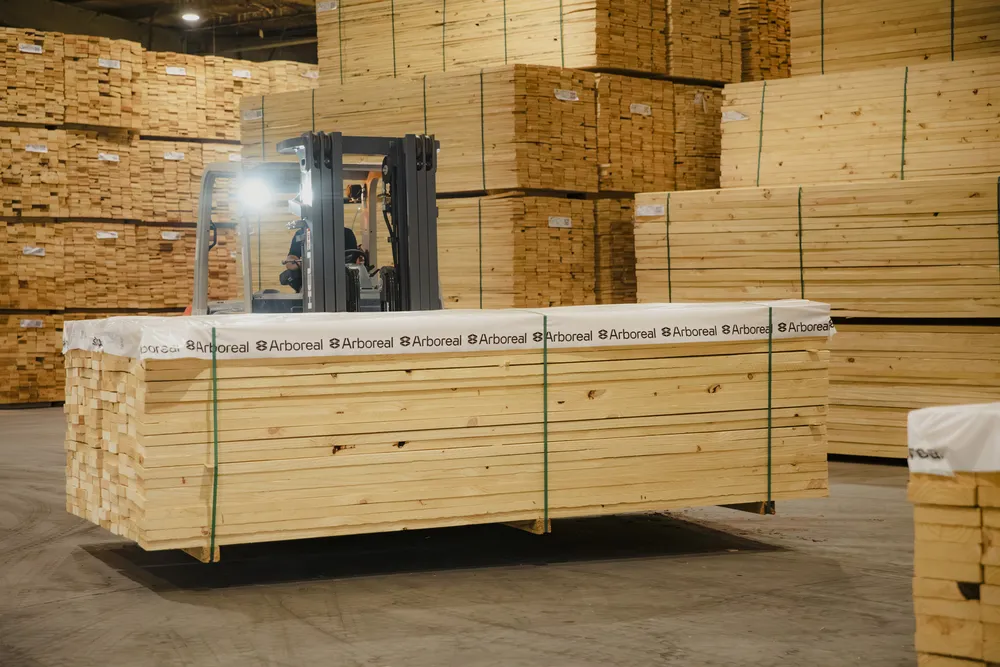
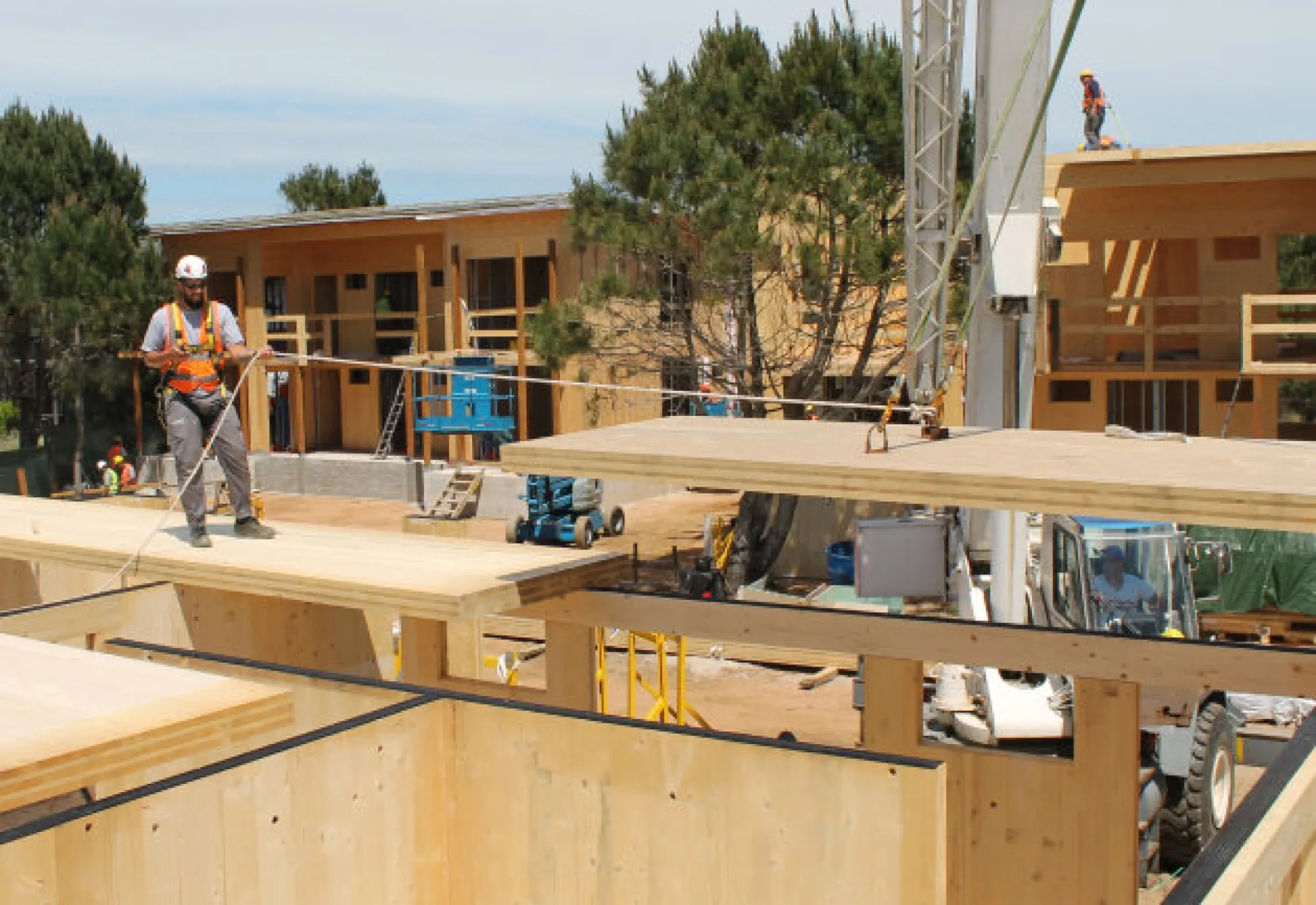
The project was developed with the participation of specialized national companies: Arboreal, responsible for the design and production of the Mass Timber CLT and GLT panels; Enkel Group, in charge of assembling those components; and José Cujó S.A., as the construction company.

CND’s presentation focused on lessons learned on-site and the value of incorporating industrialized systems into public infrastructure. Building with Mass Timber allows for the high-precision production of components in a workshop, dry assembly, accelerated construction phases, and reduced rework on site. It also incorporates wood from Uruguayan forest plantations, integrating environmental sustainability with the local supply chain.

One of the central elements was the life-cycle analysis conducted to compare the traditional system with the hybrid system incorporating Mass Timber. According to the results presented, the hybrid alternative resulted in an estimated reduction of 235,815 kg of CO₂ equivalent, representing a 53.8% decrease in total emissions from the structural project.

The roundtable also provided an opportunity to broaden the perspective on the challenges Uruguay faces in incorporating more wood into construction. UDELAR highlighted the importance of promoting specialized training for professionals in design, structural analysis, sustainable architecture, energy efficiency, responsible management of forest resources, and environmental regulations. It was also noted that the Wood Technology degree program, offered in Rivera, was developed in response to the growth of the forestry and timber industry and provides skills applicable to sustainable wood construction.

For its part, MIEM presented the industrial opportunities associated with wood construction in a country with a well-established forestry sector, where more than 90% of its plantations are certified, and a growing ecosystem of companies involved in this type of construction. The presentation also addressed the need to advance in the development of specialized products, the training of specialized professionals, standards, and greater public-private coordination.

The event concluded with a panel discussion and a Q&A session with the audience, during which participants exchanged perspectives on digitalization, sustainability, training, market barriers, and opportunities to strengthen wood construction in Uruguay.

For CND, the UTEC Rivera experience confirms that sustainability in public infrastructure depends on several factors that must work together: the technology used, the quality of the design, project management, and evidence-based decision-making. Participation in Expo Uruguay Sostenible provided an opportunity to showcase how a public project can simultaneously serve as educational infrastructure, a showcase for technology, and a contribution to national industrial development.
IFC invests in Uruguayan company Arboreal to scale sustainable wood-based solutions in Latin America

Montevideo, Uruguay, May 5, 2026 – The International Finance Corporation (IFC), a member of the World Bank Group, has announced a financing package for Arboreal, a Uruguayan company that transforms wood sourced from responsibly managed forests into high-value industrial and construction products. With additional capital mobilized from ILX Fund, this investment will help Arboreal expand its production capacity, strengthen local technical know-how and skills to scale its business, and meet growing regional demand for renewable construction materials with a lower environmental footprint.

Globally, demand for more sustainable construction materials is growing rapidly, driven by stricter standards and increasingly ambitious climate commitments, as the sector accounts for nearly 37% of global carbon emissions. In this context, wood-based construction solutions are gaining ground, as they enable the use of engineered wood for key structural elements, such as beams, columns, and panels, including in mid- and high-rise buildings, with a significantly lower carbon footprint.

IFC’s financing package to Arboreal totals US$40 million, including a US$20 million investment from IFC’s own account and an additional US$20 million mobilized from ILX Fund. The financing will support the production of thermally modified wood, strengthen circular economy practices through solutions such as biomass briquettes, promoting a more efficient use of by-products throughout the production process, and enable various additional improvements at the processing plant.

“At IFC, we are strongly committed to supporting industrial solutions that maximize the value of renewable resources, drive local development, create quality jobs, and contribute to the decarbonization of multiple value chains,” said Manuel Reyes Retana, IFC Division Director for Argentina, Brazil, Paraguay and Uruguay. “Arboreal shows how responsibly managed forest resources can be transformed into high value-added solutions with strong development impact.”

The project uses wood from certified sources. Arboreal holds FSC® certification (license FSC C134237), which ensures traceability of the wood throughout the process, from the forest to the final product, ensuring that it is sourced from sustainably managed forests, including biodiversity conservation.

“This transaction shows how private capital can support nature‑positive and climate‑aligned industrial growth in emerging markets,” said Manfred Schepers, CEO of ILX. “We are very pleased to partner with IFC on this investment, which demonstrates how disciplined sourcing, credible certification, and innovative material choices can deliver tangible climate benefits while strengthening local value chains and industrial capacity in Uruguay.”

In addition to financing, IFC will provide strategic advisory services to support the development of the regional market for sustainable construction solutions, including demand analysis, regulatory frameworks, and building standards to help scale adoption across Latin America.

“This investment marks a major milestone for Arboreal. It will allow us to expand our industrial capacity in Uruguay, develop higher value-added wood solutions, and strengthen our ability to meet growing demand for more sustainable materials and construction systems in Uruguay, our region, and globally. We greatly value IFC’s trust and support as we continue building an industrial platform based on innovation, quality jobs, and the responsible use of renewable resources,” said Matías Abergo, President and Co-founder of Arboreal.

The project will be implemented between 2026 and 2028 and will contribute to local job creation across the forestry-industrial value chain, including a 15% increase in direct employment and the creation of around 185 additional temporary and indirect jobs in areas such as transport, logistics, maintenance, and harvesting. Overall, it is expected to strengthen local value chains, build technical capabilities, and support economic diversification.

About IFC

IFC — a member of the World Bank Group — is the largest global development institution focused on the private sector in emerging markets. We work in more than 100 countries, using our capital, expertise, and influence to create markets and opportunities in developing countries. In fiscal year 2025, IFC committed a record $71.7 billion to private companies and financial institutions in developing countries, leveraging private sector solutions and mobilizing private capital to create a world free of poverty on a livable planet. For more information, visit www.ifc.org.

Stay Connected with IFC on social media.

About Arboreal

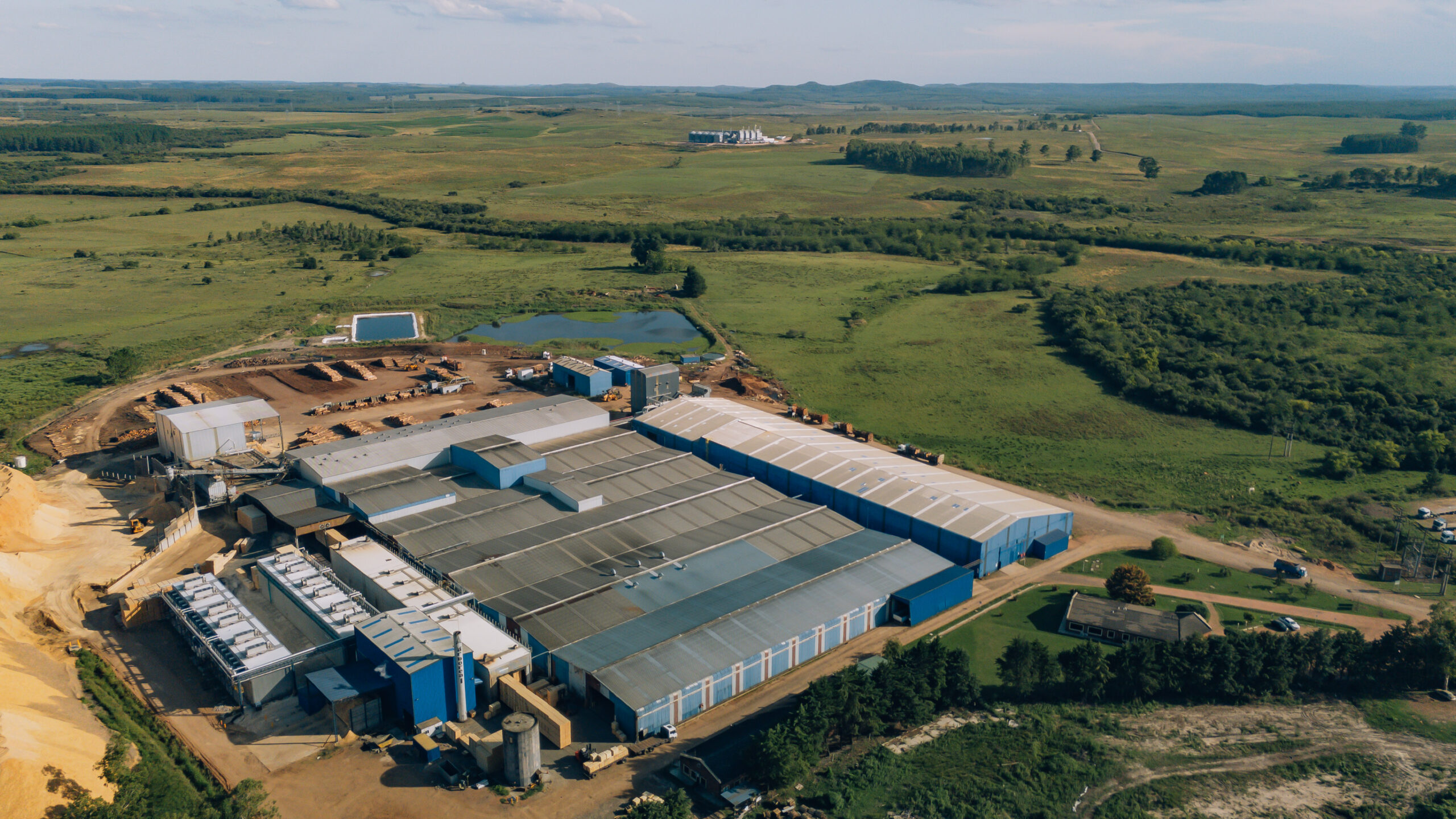
Founded in 2021 and based in Tacuarembó, northern Uruguay, Arboreal is an Uruguayan company that transforms wood sourced from responsibly managed forests into higher value-added materials for construction and other industrial uses. Its portfolio includes visual grade lumber, structural timber, and engineered wood solutions such as mass timber. Through its products, Arboreal contributes to lower-emission construction and more sustainable value chains.

About ILX

ILX Management B.V. (ILX) is an Amsterdam‑based asset manager specialising in private debt investments across Emerging Markets and Developing Economies. ILX mobilises long‑term pension capital by investing in loan participations originated by the Multilateral Development Banks and leading Development Finance Institutions. ILX focuses on SDG and climate‑aligned investments across four priority sectors: energy access and clean energy, sustainable industry and infrastructure, inclusive finance, and food security. The ILX Funds are backed by leading European pension investors and provide a scalable private debt strategy designed to deliver attractive risk‑adjusted returns alongside measurable development and climate impact. Read more information here: ILX Fund – SDG-Focused Emerging Market Private Debt


https://www.ifc.org/en/pressroom/2026/ifc-invests-in-uruguayan-company-arboreal-to-scale-sustainable-wood-based-solution

The World Bank Group and an international fund are investing in a Uruguayan company to expand its production capacity.

The  International Finance Corporation  (IFC), a member of the  World Bank Group , announced a financing package for  Arboreal , a  Uruguayan company  that transforms  wood  from responsibly managed forests into high-value-added industrial and construction products. The IFC funding, along with additional capital mobilized from the  ILX Fund , will allow Arboreal to expand its production capacity, strengthen its technical expertise and local capabilities to scale its business, and respond to the growing regional demand for renewable construction materials with a lower environmental footprint, the organization stated in a press release.

“The IFC financing package for Arboreal totals US$40 million, including a US$20 million self-funded investment and an additional US$20 million mobilized from the ILX Fund. This financing will support the production of thermally modified wood, strengthen circular economy practices through solutions such as biomass briquettes, promote better use of byproducts throughout the production process, and enable various additional improvements at the processing plant,” the statement explained.

“At IFC, we are strongly committed to developing industrial solutions that maximize the value of renewable resources, drive local development, create quality employment, and contribute to the decarbonization of multiple value chains,” said  Manuel Reyes Retana , IFC Regional Director for  South America . “Arboreal demonstrates how responsibly managed forest resources can be transformed into high-value solutions with a strong impact on development,” he added.

“This transaction is a clear example of how private capital can support industrial growth aligned with climate goals in emerging markets,” said  Manfred Schepers , CEO of ILX. “We are pleased to partner with IFC on this transaction, which demonstrates how the combination of credible certifications, responsible sourcing, and materials innovation can generate tangible environmental benefits, while strengthening local value chains and industrial capacity in Uruguay,” he added.

In addition to financing, IFC will provide strategic advisory services to support the development of the regional market for sustainable construction solutions, including demand analysis, regulatory frameworks and construction standards that facilitate their adoption in Latin America.

“This investment represents a very important step for Arboreal. It will allow us to expand our industrial capacity in Uruguay, develop higher- value-added wood solutions, and strengthen our position to meet the growing demand for more sustainable building materials and systems in Uruguay, the region, and the world. We greatly appreciate IFC’s confidence and support in continuing to consolidate an industrial platform based on innovation, quality employment, and the responsible use of renewable resources,” stated  Matías Abergo , President and Co-founder of Arboreal.

This project will be implemented between 2026 and 2028 and will contribute to local job creation throughout the forestry and industrial value chain, with a 15% increase in direct employment and the creation of approximately 185 additional jobs, including temporary and indirect positions in activities such as transportation, logistics, maintenance, and harvesting.

https://www.elpais.com.uy/negocios/noticias/el-grupo-banco-mundial-y-un-fondo-internacional-invierten-en-una-empresa-uruguaya-para-expandir-su-capacidad-productiva

The Uruguayan company Arboreal will receive a US$40 million loan from the World Bank’s International Finance Corporation


According to a World Bank press release obtained by  Café y Negocios,  this investment will allow the Tacuarembó-based company to “expand its production capacity, strengthen its technical knowledge and local capabilities to scale its business , and respond to the growing regional demand for renewable construction materials with a lower environmental footprint.”

The Uruguayan company, founded in 2021, transforms wood from responsibly managed forests into high-value-added industrial and construction products.

“This investment represents a very important step for Arboreal. It will allow us to expand our industrial capacity in Uruguay, develop higher value-added wood solutions, and strengthen our ability to meet the growing demand for more sustainable construction materials and systems in Uruguay, the region, and the world,” said Arboreal co-founder and president,  Matías Abergo.

The project, to be implemented between 2026 and 2028, is expected to contribute to local job creation throughout the forestry-industrial value chain, with a 15% increase in direct employment and the creation of approximately 185 additional jobs, including temporary and indirect positions, in activities such as transportation, logistics, maintenance, and harvesting.

Funding and objectives

IFC’s financing package for Arboreal  totals US$40 million , and includes a US$20 million loan on its own account and an additional US$20 million loan mobilized by ILX Fund, an Amsterdam-based asset manager specializing in private debt investments in emerging markets.

This financing aims to support the production of thermally modified wood, which will strengthen circular economy practices through solutions such as biomass briquettes, allowing the use of by-products throughout the production process and enabling improvements in the processing plant.

Arboreal works with certified wood, ensuring its origin throughout the entire process. “This transaction is a clear example of how private capital can support industrial growth aligned with climate goals in emerging markets,” said Manfred Schepers, CEO of ILX.

For his part, Manuel Reyes Retana, IFC’s Division Director for Argentina, Brazil, Paraguay, and Uruguay, affirmed that the organization maintains “a strong commitment to developing industrial solutions that maximize the value of renewable resources, drive local development, create quality employment, and contribute to the decarbonization of multiple value chains.”

In addition to financing, IFC will provide strategic advisory services to support the development of the regional market for sustainable construction solutions, including demand analysis, regulatory frameworks, and construction standards that facilitate their adoption in Latin America.

The trend toward construction solutions focused on wood is also noteworthy.

Globally, demand for more sustainable building materials is growing, driven by more demanding standards and increasingly ambitious climate commitments.

In a context where the traditional construction sector generates approximately 37% of global carbon emissions, wood-based construction solutions are gaining ground, as they allow the use of engineered wood for key structural elements, such as beams, columns, and panels, even in medium- and high-rise buildings, with a significantly smaller carbon footprint.

What does Arboreal produce?

Arboreal, a company founded in 2021, transforms wood from responsibly managed sources into higher-value materials for construction and other industrial uses. Its portfolio includes structural timber, sawn lumber, and wood solutions such as mass timber.


https://www.elobservador.com.uy/cafe-y-negocios/la-empresa-uruguaya-arboreal-recibira-un-prestamo-us-40-millones-la-corporacion-financiera-del-banco-mundial-n6042866/amp

The Disrupter: Uruguay Looks Trans-Tasman to Shake Up Mass Timber

From Montevideo to Melbourne, Arboreal is taking its mass timber knowledge to the world

Long considered the “Switzerland of South America,” Uruguay has emerged as a major player in the development of mass timber across Latin America. Now, Uruguyans are applying their know-how worldwide and looking to supply cross-laminated timber and glulam to faraway markets, including Australia and New Zealand.

Earlier this month, Wood Central spoke to Matias Abergo, Arboreal’s President and Co-Founder, and Guy Jacobson, Arboreal’s Global Business Development Manager, who were both in Melbourne for Timber Construct – Australia’s largest timber construction conference.

“We now export 450 containers (of timber) a month and supply 22 countries (with lumber),” Mr Abergo said, adding that Arboreal’s “state of the art mass timber plant” is a first for Uruguay. “We came from the construction industry; normally, you would start with the forestry, then do the sawmilling, and then add value to your lumber.”

“But in our case, we discovered that we can make this transition to help drive the automation of construction,” Mr Abergo said. “So we started in 2017 and fell in love with mass timber. Not just for the speed of construction but for the decarbonisation.”

Wood Central’s Jason Ross interviews Matias Abergo, Arboreal’s President and Co-Founder at Timber Construct. Footage courtesy of @woodcentralau1.

Starting with importing European timbers and using them on projects, Aboreal then took the leap and decided to establish a bricks-and-mortar plant and industry in Uruguay. “We think this is going to grow faster and faster,” Mr Abergo said, adding that Uruguay is at the forefront of the push to net zero, with the Arboreal’s plant one of many now operating off close to 100% renewable energy.

But why Australia and New Zealand?

According to Guy Jacobson, the product has been warmly received in Australia and New Zealand. “We know that there are a lot of projects in the pipeline (for 2025); we know that there are a lot of developers that are looking for some interest rate reprieve.”

“We believe competition is a good thing,” Mr Jacobson said, adding that “we (as a business) are really looking forward to growing our presence in this market over the next five to ten years.”

  • Wood Central will have an exclusive interview with Arboreal in the coming weeks.

Jason Ross. “The Disrupter: Uruguay Looks Trans-Tasman to Shake Up Mass Timber”
https://woodcentral.com.au/the-disrupter-uruguay-looks-trans-tasman-to-shake-up-mass-timber/

Exploring the World of Mass Timber

Mass Timber is a revolutionary sustainable construction system that utilizes large-scale prefabricated wood components, offering a range of significant advantages. These components, including walls, floors, columns, and beams, are manufactured with high precision in a controlled environment, ensuring rapid and efficient construction. The strength and density of its components make Mass Timber structures ideal for high-rise buildings.

One of the elements in the Mass Timber product family is Cross-Laminated Timber (CLT), a product composed of multiple orthogonal layers of structural wood, bonded with high-performance adhesive. Its versatility allows for a variety of applications, from walls and floors to roofs in multi-story buildings. On the other hand, Glue-Laminated Timber (GLT), made by bonding structural wood sheets in a single direction, offers exceptional strength-to-weight ratio, making it ideal for beams, columns, and linear elements.

Both CLT and GLT have exceptional strength and stability, as well as effective thermal and acoustic insulation properties. Additionally, their sustainable manufacturing process and carbon storage capacity make these materials an environmentally friendly choice for construction.

CLT panels and GLT beams arrive at the construction site ready for installation, reducing construction time and cost. This is thanks to the power and precision of numerical control machines, capable of performing high-quality machining.

In Uruguay, the only Mass Timber plant capable of producing large-scale projects with GLT and CLT is Arboreal, located in Tacuarembó. It also has a Technical Office in Montevideo, staffed by a specialized team of engineers and architects.

Arboreal’s participation in the Mass Timber Conference not only showcased its capability and quality in Mass Timber production but also helped to position the local forestry industry on a global level.

*
Facundo De Acevedo. “Exploring the World of Mass Timber.” Panorama Forestal, https://panoramaforestal.uy/explorando-el-mundo-del-mass-timber/.