Sustainability

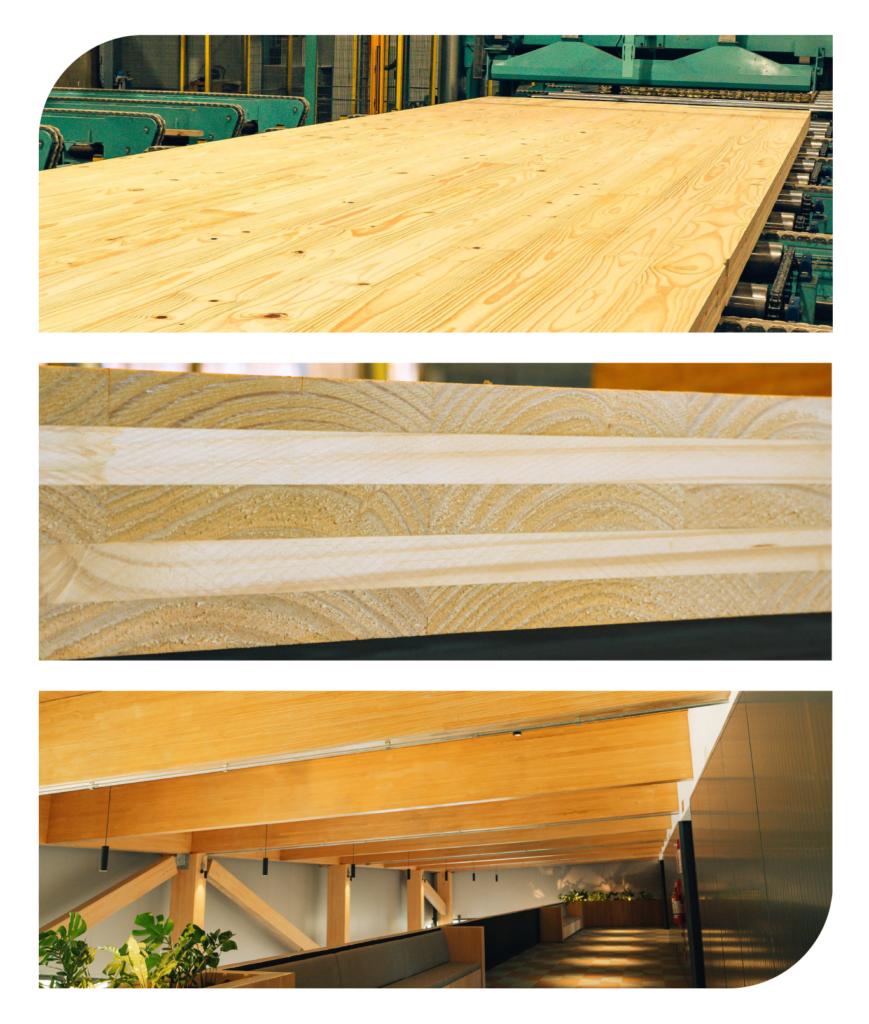
We are an industrial bioeconomy platform specializing in the production and marketing of wood and mass timber (CLT and GLT) solutions sourced from sustainably managed and certified forests.

Our Mission
To accelerate the transition to net-zero carbon emissions

Our commitment to sustainability is reflected in every aspect of our operations.

Energy and Efficiency

We promote the efficient use of energy resources throughout our production process.

  • To generate thermal energy, we use biomass derived from byproducts of our own industrial operations, adding value to materials generated during wood processing and promoting the comprehensive use of this resource.
  • In addition, we use electricity from Uruguay’s national grid. Uruguay has one of the cleanest electricity mixes in the world: in 2025, 98% of the country’s electricity generation came from renewable sources, primarily hydro, wind, biomass, and solar.

This combination of our own biomass and electricity from predominantly renewable sources helps reduce the carbon footprint of our operations and the products we manufacture.

In 2025, we reduced electricity consumption per cubic meter produced by 5% compared to 2024, improving our energy intensity. We continue to identify opportunities to reduce consumption and increase the efficiency of our operations.

Biogenic Carbon Storage

Our products act as natural sinks, retaining the carbon captured from the atmosphere during the tree’s growth.

Biogenic carbon is the carbon that wood captured from the atmosphere in the form of CO₂ during the tree’s growth. 

  • Measurable impact: 1 m³ of our CLT or GLT stores 743 kg of CO₂ equivalent.
  • Long-term sequestration: This value corresponds to the biogenic carbon sequestered in the wood throughout the product’s entire service life.
  • International standard: In Life Cycle Assessment (LCA) studies, we use CO₂ equivalent (CO₂e) as a common unit to maintain consistency with climate change indicators and ensure comparability among materials.


The reported CO₂ equivalent corresponds to stored biogenic carbon and does not constitute an offset credit.

Transparency and Performance (EPD)

We measure and report the environmental performance of our products through Environmental Product Declarations (EPDs), both for our mass timber solutions and our structural panels, providing transparent and verifiable information that supports the path toward decarbonization.

Our Environmental Product Declarations (EPDs) quantify the environmental performance of mass timber products in a transparent, verifiable, and comparable manner through a Life Cycle Assessment (LCA).

Life Cycle Assessment (LCA) is the standardized study we use to quantify and express the environmental performance of products using a common unit of comparison.

Objective evidence: The EPD provides objective environmental indicators that demonstrate how products contribute specifically to global sustainability goals.

Access our Environmental Product Declarations:

Environmental Product Declaration (EPD)
CLT

Environmental Product Declaration (EPD)
GLT

Environmental Product Declaration (EPD)
Structural finger jointed solid timber

Environmental Product Declaration (EPD)
Strength graded structural timber

Contribution to the Sustainable Development Goals (SDGs)

Sustainability Made Tangible
Our Environmental Product Declarations (EPDs) allow us to demonstrate real and measurable contributions to the Sustainable Development Goals (SDGs) through data aligned with international standards:

  • SDG 9 – Industry, Innovation, and Infrastructure: Industrialized construction solutions with low environmental impact.
  • SDG 12 – Responsible Consumption and Production: Use of renewable raw materials and product environmental transparency.
  • SDG 13 – Climate Action: Biogenic carbon sequestration and reduced global warming potential compared to conventional materials.